Tag Archives: relationships

Defence Mechanisms

Excuses, excuses.

Excuses can be seen as a way to mitigate personal responsibility or as a subtle form of apology. We often use them in hopes of softening the frustration of someone we have let down, yet consistently relying on excuses can reveal a conscious or unconscious attempt to manipulate other people’s emotions, seeking either pity or control. It’s important to differentiate between someone making an excuse to spare another’s feelings and someone doing so to avoid accountability.

We employ all kinds of excuses to justify poor behaviour. These excuses spring from our belief system and are fertilised by unconscious guilt, shame or denial. Admitting we are wrong deflates the ego, while using an excuse neutralises the effect on our self-esteem. Using excuses like being distracted or overwhelmed with work is less damaging to our ego than admitting we are negligent or forgetful. Excusing our behaviour shifts responsibility to external factors, allowing us to avoid accountability. In so doing, we do not have to feel or process any guilt associated with our behaviour.

When we continually use excuses to mask our behaviour, we are signalling to the world that we have no control over our actions. Our energy conveys that we are not mature enough to take responsibility for our choices and their consequences. Excuses and denial are weeds that choke the seeds of potential. Every excuse we make to avoid facing our emotions stunts our growth, and the harm we inflict on our authentic self is mirrored back to us by the outer world.

Energy Signals

Feelings, such as shame and guilt, are less desirable than dignity or pride, and call for humility. It is the value judgment we attach to an emotion that characterises the feeling as right or wrong, good or bad. These labels are often subjective and are shaped by past experiences and beliefs. The key to releasing an emotion is to allow it to exist without assigning a value to it. This form of acceptance is transformational.

Emotions are energy signals from our body informing us of certain behaviours that are out of alignment with our authentic self. If we’ve wronged someone, they serve as a prompt to address the situation. If we avoid the prompt, the energy from the emotion is projected in the mind and becomes distorted by value judgements. For instance, a man cuts ahead of people queueing at a coffee takeout. He becomes aware of an energy signal that indicates he is out of sync with the people around him (our collective energy comes from the same source). Instead of apologising or stepping back in line, he ignores the emotion, and it triggers a feeling response such as ‘I’m justified because I am in a hurry’, or, ‘I am a regular customer and deserve to be served first’.

An objectified emotion becomes a feeling. Continuing to ignore energy signals lead to further projection of hurt and pain onto the world around us, which can manifest in disagreements at work, or arguments at home. If not addressed, these situations escalate into conflict and drama.

We may automatically use avoidance as the best option to numb our feelings by binging on TV, food or drink. Regardless of the avoidance strategy we use, we are letting our unresolved conflicts dictate our behaviour instead of confronting the issue. When we deny a feeling within us, we consign the energy to the unconscious where it causes behavioural defects. When we avoid necessary conversations to resolve conflicts, it often stems from a fear of the outcome. We may have witnessed or participated in conflicts that led to irreparable breakdowns, which have shaped our coping strategies. We might either avoid disputes altogether to preserve a relationship, or end a relationship to steer clear of conflict. This is the foundation of maladaptive behaviour, where we link every tense argument to a potentially explosive situation based on our history.

Releasing Emotions

We need intention and self-awareness to follow our behaviour back to its origin. We also require determination. We have magpie minds that alight on glitter rather than mining for real treasure. Once we recognise disturbing thoughts and behaviours, we may feel compelled to struggle against them. We falsely believe that by fighting them, we can eliminate unwanted inclinations. However, our role is simply to be an observer. When we observe difficult thoughts, we must also experience the emotions that accompany them. Avoiding our feelings can result in mental wrestling, leading to a chaotic spiral of thoughts. Notice an emotion in your body that is triggered by a thought or feeling. (Remember, a feeling is an emotion embellished with value judgements; an emotion is a sensation stripped of thought.) Allow the emotion to be as it is, whether it is a tingling or heavy sensation; just observe it without resistance or judgement. With this continued practice, the energy will release and it can no longer fuel difficult thoughts and maladaptive behaviour.

When we become aware of maladaptive behaviours and their source, they cease to have an unconscious hold over us. Instead of an automatic reactive response in a triggering situation, we have a conscious choice of how we act, or react to the emotional stressor. Avoidance is a maladaptive behavioural response to excessive fear and anxiety. Avoiding challenging situations may provide temporary relief, but it can hinder personal growth and fulfilment over time. Avoidance as a coping mechanism leads to dependence, and it undermines our confidence.

We must push through limiting attitudes if we are to germinate and grow. A seed needs darkness to germinate and light to grow. When we are immersed in darkness, we are in germination; we must keep pushing through until we reach the light of a new consciousness, a higher level of understanding. Life is cyclical, seasons come and go, and we are perennial, cosmic flowers having a human experience. 

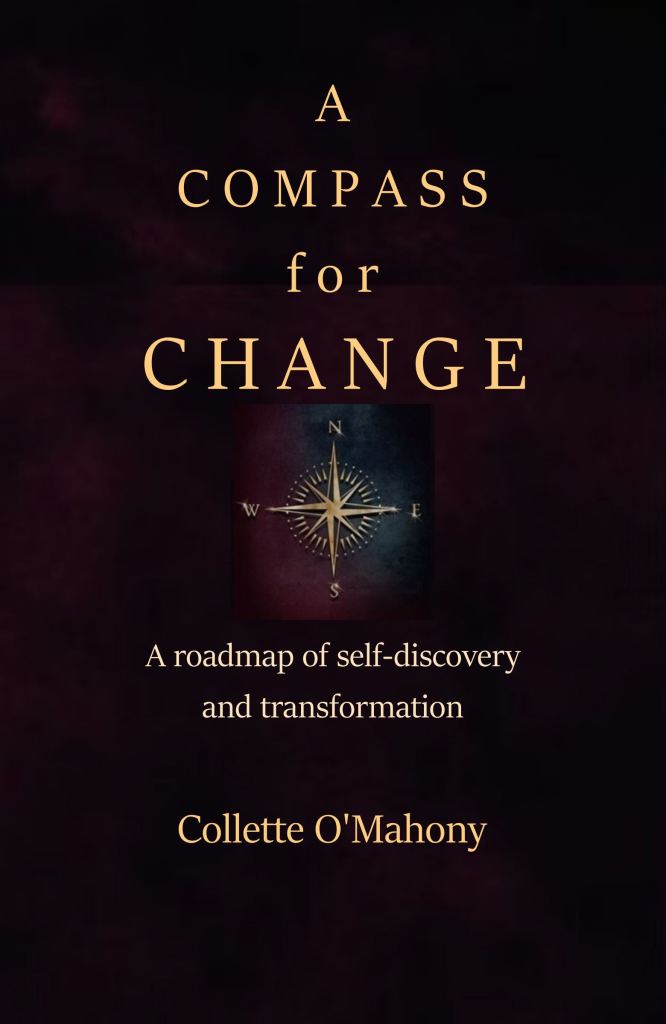
Taken from A Compass for Change

Collette O’Mahony

June 2025

Recognising Behaviour Patterns

Maladaptive behaviour refers to actions that are ineffective or counterproductive when adapting to situations. These behaviour patterns often hinder personal growth, coping skills, or social functioning. We have already discussed avoidance as a maladaptive strategy, which can lead to conflict in relationships or work, impacting mental health.

Maladaptive behaviours are usually formed to serve a purpose, such as relieving stress, or to avoid uncomfortable feelings. By understanding their function, we can look at healthier alternatives to fulfil that purpose. We need to recognise the emotional stressors that trigger our maladaptive behaviours. For instance, feeling unwell might lead us to worry that our symptoms indicate a serious condition. If this behaviour goes unchecked, it may escalate and we start to catastrophise, imagining our illness as a life-threatening disease. This fear often originates from past experiences, such as a loved one who visited the doctor and ended up in the hospital for an extended period, or perhaps never returned home. In this case, the fearful emotional memory is the root cause of the catastrophising behaviour, which in turn induces anxiety.

Passive-aggressive behaviour is a defence mechanism that people use to express negative feelings indirectly rather than confronting them openly. This behaviour often stems from an inability or unwillingness to communicate emotions like anger, frustration, or resentment in a direct, assertive way. Instead of addressing issues head-on, individuals who use passive-aggressive tactics engage in subtle resistance, sarcasm, procrastination, or sullen behaviour. This defence mechanism often develops as a way to avoid conflict or the discomfort of expressing anger openly, especially in environments where direct expression of emotions is discouraged or unsafe. While passive-aggressive behaviour may temporarily shield someone from confrontation, it ultimately undermines relationships and personal growth. It leads to unresolved issues and creates confusion or frustration for others, as the true emotions remain hidden behind a mask of compliance or indifference.

Another example of maladaptive behaviours is people-pleasing, especially if it tries to emulate, rather than demonstrate genuine compassion. People-pleasing can be used to gain social acceptance, affection and to boost low self-esteem. This compulsivity arises from the need to be liked, accepted and fit into society.

To uncover the root of a maladaptive behaviour such as catastrophising, people-pleasing or passive-aggressiveness, we must examine our core beliefs, asking ourselves: Who did we feel we had to please in order to survive? And deep down, are we still trying to gain that person’s approval?

It is essential to connect to our authentic self to prioritise our goals and well-being over social approval. When we are guided by our authentic self, we find that our best interest is also for the highest interest of others, this is a natural symbiotic relationship that occurs in the shared fabric of existence.

Trigger and Response.

With guidance and practice, we can learn to recognise triggers that cause a heightened emotional response to an event, person or image. We must identify these triggers in the moment, pause, then using something as simple as three deep breaths to break the automatic link between the emotional stressor and our automatic behavioural response, or reaction.

By taking responsibility for how we manage our emotions, we free ourselves from being ruled by automatic, often impulsive, behaviours that can escalate situations into conflict. Instead, we gain the freedom to choose how we respond, ensuring that our actions align with our values rather than our immediate emotional state.

When emotions are suppressed rather than addressed, they tend to resurface later, often with more intensity, triggered by similar situations from the past. Taking responsibility means acknowledging these emotions and addressing them head-on, rather than letting them fester. Once the emotional intensity cools, reflecting on the situation and the emotions it evoked such as fear, anger, guilt, or something else, gives us the power to understand our patterns and anticipate future reactions.

True Potential.

Taking responsibility is an important step towards realising our true potential. We must hold ourselves accountable for our thoughts, words and actions that negatively impact on our lives and others. Every harsh word from the inner critic of our mind, toward ourselves, shrinks the fulfilment of potential. When our minds are restless and our hearts are troubled, we lose connection with our inner guidance and struggle to know which way to go. When our minds are calm, our hearts open, and we gain clarity.

Through quiet reflection and conscious breathing, we can gain access to inner directive and our truest nature. True self is deeper than flesh, it is a wholesome nourishment in the seed of the individual, propagated by responsibility and freedom. The courage to change helps us to break through the tough shell of mental inertia to realise the fruit of our true design. Healing work is tending to the seed, encouraging it to germinate and casting off the husk of conditioned behaviour and unconscious beliefs. The seed of potential must be nourished by daily mindfulness to expand awareness.

We all have blind spots when it comes to our behaviour, sometimes it takes someone else to challenge us on our difficult or challenging behaviours. When confronted with these blind spots, we often become defensive or deny them, confusing our behaviour with our sense of identity.

An extract from my book A COMPASS FOR CHANGE

For online counselling contact me at : info@colletteomahony.com

or visit my counselling page colletteomahony.com/counselling

Resolving Conflict in Relationships

Recognising areas of conflict

To diffuse misunderstandings in a relationship, we must focus on the feelings that contribute to the situation by processing our emotions. We can then use analytical thinking grounded in facts rather than emotional thinking based on fear. This helps us to better understand our differences and look for a resolution. Conversely, if we exit relationships rather than work through conflicts, we risk accumulating a pattern of broken connections. While we might make excuses for relationship breakdowns or blame others for being unreasonable, we are ultimately at the centre of all our relationships. It is essential to recognise that conflict arises from our avoidance of processing emotions.

We need intention and self-awareness to follow our behaviour back to its origin. We also require determination. We have magpie minds that alight on glitter rather than mining for real treasure. Once we recognise disturbing thoughts and behaviours, we may feel compelled to struggle against them. We falsely believe that by fighting them, we can eliminate unwanted inclinations. However, our role is simply to be an observer. When we observe difficult thoughts, we must also experience the emotions that accompany them. Avoiding our feelings can result in mental wrestling, leading to a chaotic spiral of thoughts. Notice an emotion in your body that is triggered by a thought or feeling. (Remember, a feeling is an emotion embellished with value judgements; an emotion is a sensation stripped of thought.) Allow the emotion to be as it is, whether it is a tingling or heavy sensation; just observe it without resistance or judgement. With this continued practice, the energy will release and it can no longer fuel difficult thoughts and maladaptive behaviour.

When we become aware of maladaptive behaviours and their source, they cease to have an unconscious hold over us. Instead of an automatic reactive response in a triggering situation, we have a conscious choice of how we act, or react to the emotional stressor. Avoidance is a maladaptive behavioural response to excessive fear and anxiety. Avoiding challenging situations may provide temporary relief, but it can hinder personal growth and fulfilment over time. Avoidance as a coping mechanism leads to dependence, and it undermines our confidence.

We must push through limiting attitudes if we are to germinate and grow. A seed needs darkness to germinate and light to grow. When we are immersed in darkness, we are in germination; we must keep pushing through until we reach the light of a new consciousness, a higher level of understanding. Life is cyclical, seasons come and go, and we are perennial, cosmic flowers having a human experience. 

An extract from – A Compass for Change.

Click on the image to go to my Amazon Bookshelf.

Collette.

Overcoming Blind Spots in Our Behavior

We all have blind spots for our behaviour; sometimes it takes someone else to challenge us on our difficult or challenging behaviours. When confronted with these blind spots, we often become defensive or deny them, confusing our behaviour with our sense of identity. We may be within our rights to confront someone about their behaviour, but how we respond makes a difference in whether the situation is diffused or escalates.

If we can respond calmly, we might even get an apology. But if we react with anger, the other person is likely to deny their behaviour. To resolve our anger, we need to identify its source and address it directly with the person involved so they understand the effect their behaviour is having on us. If we stay silent, our bottled-up frustration will probably come out as misplaced anger later.

Accountability is paramount when facing the more challenging parts of our behaviour, feelings and beliefs. While we tend to evaluate others based on their behaviour, we primarily perceive ourselves through the lens of our good intentions rather than the quality of our behaviour. This form of myopia can obscure our awareness, causing us to act out in ways that misrepresent us, and offend others. This is our shadow self or blind-side, the obscured place where opinions, beliefs and prejudices go unnoticed and unchallenged. Developing awareness of our prejudices and assumptions, when processing new information, takes mindfulness and determination. If our behaviour is causing someone distress, it’s important to identify what that behaviour is and adjust our responses accordingly. We need to take responsibility for such maladaptive behaviours by interrupting the automatic cycle that connects emotional triggers to our behaviour and actions. We achieve this through mindfulness. Regular mindfulness practice and a commitment to discovering our true potential can transform our thinking, as well as our words and actions.

When our feelings are clear and unclouded, it leads to more focused thinking. Inspired thoughts that arise from our inner directive lead to inspired action. By taking ownership of our thoughts and actions, we convey a powerful message that we are progressing toward responsibility and unlocking our true potential.

Extract from A Compass for Change – available now on Amazon.

Understanding Maladaptive Behaviors

Maladaptive Behaviour.

Maladaptive behaviour refers to actions that are ineffective or counterproductive when adapting to situations. These behaviour patterns often hinder personal growth, coping skills, or social functioning. For instance, avoidance is a maladaptive strategy, which can lead to conflict in relationships or work, impacting mental health. Maladaptive behaviours are usually formed to serve a purpose, such as relieving stress, or to avoid uncomfortable feelings such as guilt, shame or fear. By understanding their function, we can look at healthier alternatives to fulfil that purpose. We need to recognise the emotional stressors that trigger our maladaptive behaviours. For instance, feeling unwell might lead us to worry that our symptoms indicate a more serious condition. If this behaviour goes unchecked, it may escalate and we start to catastrophise, imagining our illness as a life-threatening disease. This fear often originates from past experiences, such as a loved one who visited the doctor and ended up in the hospital for an extended period, or perhaps never returned home. In this case, the fearful emotional memory is the root cause of the catastrophising behaviour, which in turn induces anxiety.

Passive-aggressive behaviour is a defence mechanism that people use to express negative feelings indirectly rather than confronting them openly. This behaviour often stems from an inability or unwillingness to communicate emotions like anger, frustration, or resentment in a direct, assertive way. Instead of addressing issues head-on, individuals who use passive-aggressive tactics engage in subtle resistance, sarcasm, procrastination, or sullen behaviour. This defence mechanism often develops as a way to avoid conflict or the discomfort of expressing anger openly, especially in environments where direct expression of emotions is discouraged or unsafe. While passive-aggressive behaviour may temporarily shield someone from confrontation, it ultimately undermines relationships and personal growth. It leads to unresolved issues and creates confusion or frustration for others, as the true emotions remain hidden behind a mask of compliance or indifference.

Another example of maladaptive behaviours is people-pleasing, especially if it tries to emulate, rather than demonstrate genuine compassion. People-pleasing can be used to gain social acceptance, affection and to boost low self-esteem. This compulsivity arises from the need to be liked, accepted and fit into society. This maladaptive behaviour in its extreme can result in sycophantic behaviour where acquiescence buys affection, and truth is traded for flattery.

Libido and Mortido by George Mayer.

To uncover the root of a maladaptive behaviour such as catastrophising, people-pleasing or passive-aggressiveness, we must examine our core beliefs, asking ourselves: Who did we feel we had to please in order to survive? And deep down, are we still trying to gain that person’s approval?

It is essential to connect to our authentic self to prioritise our goals and well-being over social approval. When we are guided by our authentic self, we find that our best interest is also for the highest interest of others, this is a natural symbiotic relationship that occurs in the shared fabric of existence.

In our daily life, we encounter triggers that threaten to unlock feelings we have long tried to conceal. Projection, denial and passive aggressiveness are all maladaptive behaviours used to deflect attention from deep rooted psychological pain and vulnerability. While defensive behaviour learned in childhood may have offered us some protection or temporary relief at the time, it often becomes counterproductive in adulthood. Defensive mechanisms we learn in childhood can hinder our ability to form healthy relationships as adults, to address problems constructively, and develop emotional resilience.

It takes intention and self-awareness to follow a behaviour back to its origin. It also requires determination. Once we recognise disturbing thoughts and behaviours, we may feel compelled to struggle against them. We falsely believe that by fighting them, we can eliminate unwanted inclinations. However, our role is simply to be an observer. When we observe difficult thoughts, we must also experience the emotions that accompany them. Avoiding our feelings can result in mental wrestling, leading to a chaotic spiral of thoughts.

Notice an emotion in your body that is triggered by a thought or feeling. (a feeling is an emotion embellished with value judgements; an emotion is a sensation stripped of thought.) Allow the emotion to be as it is, whether it is a tingling or heavy sensation, just observe it without resistance or judgement. With this continued practice, the energy will release and it can no longer fuel difficult thoughts and maladaptive behaviour. When we become aware of maladaptive behaviours and their source, they cease to have an unconscious hold over us. Instead of an automatic reactive response in a triggering situation, we have a conscious choice as to how we act, or react, to the emotional stressor.

From my upcoming book ‘A Compass for Change’ ( A roadmap of self-discovery and transformation). Available soon on Amazon Books.

Collette O’Mahony.

November 2024.