
Tag Archives: grief

Coping with unwelcome Change.

A cataclysmic event like the death of a loved one, divorce, or job loss dramatically shifts us from a state of stability into the unknown. Stability offers a sense of continuity, routine, and security, while such unexpected events dismantle that foundation, forcing us into a space where growth, adaptation, and emotional processing become necessary.

When something significant occurs, especially unexpectedly, it directly affects our mental health. These events disrupt our familiar patterns and throw our lives into emotional and practical turmoil. We may experience intense feelings of loss and grief, as our subconscious mind, which thrives on repetition and stability, struggles to cope with sudden change.

Whether the change is gradual, like separation and divorce, or immediate, like the sudden death of a loved one, the event triggers a cascade of emotional and psychological responses such as shock, grief, confusion, and even disorientation. In these moments, our natural inclination is to resist change. The subconscious mind clings to established routines and familiar behaviours, attempting to restore a sense of stability. For instance, someone experiencing bereavement may wake up expecting their loved one to still be there, only to be painfully reminded that they are gone. This is because the subconscious takes longer to process and accept changes that contradict its habitual patterns.

Faced with sudden, unwelcome change, resistance is a natural, almost automatic, reaction. This resistance stems from the mind’s need to hold on to the safety and familiarity of stability. Our subconscious mind is programmed to maintain order through daily habits and conditioned responses, but when those routines are shattered, the mind becomes overwhelmed, leading to a sense of confusion, forgetfulness, and emotional exhaustion. This is evident in the grieving process.

Grief

After the loss of a loved one, it can take weeks or even months for the subconscious mind to adjust to the new reality. During that time, the conscious mind bears the weight of constantly reminding the subconscious that the loss is real, which can feel mentally and emotionally exhausting. This ongoing mental battle adds to the feelings of disorientation that many grieving individual’s experience, leaving them questioning their sanity.

The subconscious starts to adapt in time, and the gradual process of adjustment to sudden change begins. Just as our mind gradually learned routines and habits during stable periods, it can relearn new patterns in the wake of change. But this adaptation doesn’t happen overnight. Eventually, as the subconscious begins to acknowledge the reality of the situation, the emotional and cognitive strain on the conscious mind starts to ease. As the subconscious adjusts, feelings of confusion and mental overload begin to lift. The grieving person starts to experience moments of clarity, and with it, the ability to process their feelings of loss in a more focused and manageable way. This adjustment marks the point where growth begins to emerge from the loss of stability.

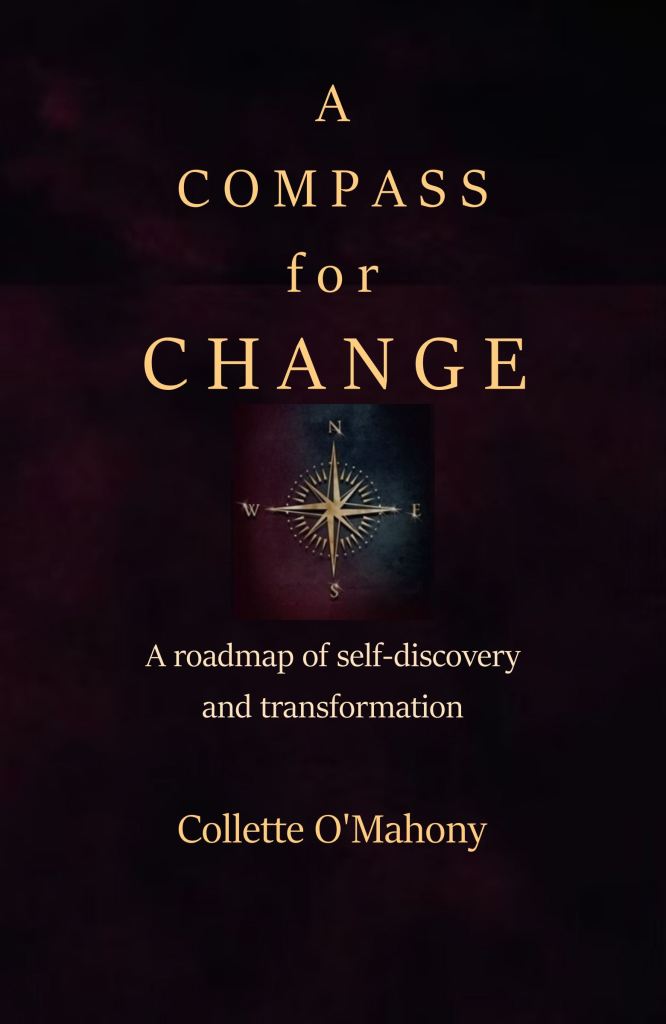
A extract from my new book on change and inner transformation – A Compass for Change.
Navigating Change

An extract from my upcoming guidebook – A Compass for Change.

When something cataclysmic occurs it has a direct effect on our mental health. This may be a gradual cause like separation and divorce, or an unexpected cause such as sudden death. The cause is the event, the effect is the feelings of loss and grief. We cannot undo the event no matter how much we may wish to but we can gradually process our feelings by giving them our attention. The effect of a job loss may shake our confidence and lead to financial uncertainty, on the other hand it may lead to better opportunities and increased salary. Preparation is the key to success in most fields of endeavour, it is similar for good mental health. Most people face a crisis when unwanted change is forced upon them through tragic or unavoidable circumstance. Similarly, those who try to avoid change reach a point where their health suffers due to a clash between their conditioned mind and their inner directive. The conditioned mind functions on schemas, the parameters laid down by learned habits, beliefs and structure. It arises from childhood and is influenced by family structure, schooling, regional and national thinking. On the other hand, the inner directive is our intuition, that which says something is wrong even if others try to convince you otherwise. Too often we allow ourselves to be swayed by what people think of us, or the mood of the collective.

Our initial response to enforced change is often resistance. This is understandable given how the subconscious operates. It takes longer for our subconscious mind to accept change, it runs on a conditioned loop compromising of our daily habits and cognitive learning, culminating in repetitive behaviour patterns. When these behaviour patterns are thrown into tumult through an unexpected event, the subconscious mind tries to default to the habitual patterns causing the thinking mind to struggle with the new situation. This is something that those who are bereaved struggle with, particularly in the early stages of grief, the conscious mind has to constantly remind the subconscious that their loved one is no longer with them. It can take several months for the subconscious to acknowledge the death, when it eventually does it reduces mental pressure. This permits normal functioning of the mind to resume and allow time for the bereaved person to process grief. Many bereaved people report feeling lost, confused, forgetful or think they are losing their mind; it could just be that the thinking mind is overloaded with functions that are normally designated to the subconscious. The subconscious will eventually register the change and adapt accordingly, but during the adjustment period there are feeling of loss and grief that require inner attention.

Many people take the view that free will is an illusion, and that our behaviour is governed by forces over which we have no control. Consequently, how we act or react is viewed as predictable or unavoidable. Our behaviour can be predictable, but that doesn’t make it’s inevitable. We can choose how to behave, but this is restricted if we determine we have to behave according to our structural belief system. As individuals we are free to choose our behaviour, we have a choice to act responsibly or irresponsibly.

Collette O’Mahony. 10/02/2024

Excerpt from the guidebook – A Compass for Change.