
For centuries, women’s experiences, emotions and behaviour have been interpreted through social, medical and intellectual frameworks largely shaped by men. From the ancient idea of the wandering womb to the more recent recognition of coercive control, the underlying question has often been who has the authority to define women’s experiences, judge their behaviour and determine the boundaries of their freedom. Although women’s legal and social position has changed considerably, the beliefs and expectations inherited from earlier generations have not simply disappeared. They can remain embedded in family relationships, cultural expectations and, perhaps most significantly, in the way women learn to see themselves.
We are witnessing a cultural shift in which women are increasingly recognising patterns of psychological manipulation, control and conditional worth that previous generations may have experienced but struggled to name. This is more than a change in social attitudes. It is also a process of collective psychological recognition.
From Hysteria to the questioning of Women’s authority
The history of women’s subjugation is long and complex, but one particularly revealing example can be found in ancient medical thinking. The Greek word hystera means womb. In ancient Greek medical thought, the womb was sometimes believed to wander around the body, causing physical and emotional disturbances. Plato’s Timaeus also described the womb in terms of an animal with its own desires and needs. These ideas reflected a wider tendency to explain women’s experiences through their reproductive biology rather than considering their emotional, intellectual and social circumstances.

Over subsequent centuries, the diagnosis of hysteria became associated with an extraordinary range of symptoms and behaviours. Women’s dissatisfaction and emotional expression could be interpreted as evidence of illness or instability, rather than as responses to their circumstances. The terminology survived well into modern psychiatry. The American Psychiatric Association’s DSM-II, published in 1968, included the category ‘hysterical neurosis’. It was removed as a diagnostic category in the DSM-III in 1980, although related conditions continued under different classifications.
While medical understanding evolved and some practitioners genuinely sought to understand suffering, it is worth recognising how readily women’s experiences were interpreted through assumptions about female weakness, emotional instability and biological inferiority. These ideas existed alongside social and legal structures that placed men in positions of authority within families, marriage, government and public life.
A framework built for women by male ideals.
The idea that women were less rational, less capable of independent judgement or naturally suited to domestic and supportive roles influenced education, employment, marriage and family life. Women’s value was frequently measured against their ability to fulfil expectations established within a male-dominated social order. This conditioning was not always imposed through direct instruction or obvious restrictions. It was also transmitted through everyday relationships, family expectations, religious and cultural traditions, and the social consequences of stepping outside accepted roles. Women learned what was expected of them, often through observing the experiences of their mothers and grandmothers.
Women have always recognised and resisted inequality. What is changing is the visibility of these experiences and the framework through which they can be understood and challenged. Women are developing a language that allows them understand their experiences, worth and what freedom means to them. The freedom to make choices is central to the new framework. The ability to feel entitled to make them, without guilt, fear or the need for approval.
The inheritance of conditional worth
Perhaps one of the most enduring consequences of this history is the way external expectations can become internal beliefs. For generations, a woman’s worth has often been associated with her appearance, marriageability, motherhood, sexual respectability, obedience and ability to care for others. Being agreeable, accommodating and emotionally available could be rewarded, while independence, disagreement or assertiveness might attract criticism or disapproval.
The underlying message was frequently conditional: you are valued when you fulfil the expectations placed upon you. These messages can become deeply embedded in a person’s understanding of herself. A woman may learn to question her judgement before questioning someone else’s behaviour. She may feel guilty for prioritising her own needs, uncomfortable when expressing disagreement or responsible for maintaining harmony within her relationships. She may not consciously believe that she is inferior to men. Yet she may still behave as though her needs, opinions and ambitions are less important. This is how cultural conditioning can survive beyond the circumstances that originally supported it. What began as an external expectation becomes an internal standard against which a woman measures herself.
These patterns can also pass between generations. Mothers may unintentionally teach daughters to accommodate, avoid conflict or place others first because these were the strategies that helped them navigate their own circumstances. Such behaviours are not necessarily the result of deliberate instruction. They can be learned through observation, attachment and the emotional atmosphere of family life. This is how generational wounds are carried forward. The original restrictions may have changed, but the beliefs and protective behaviours developed around them can remain.

From overt restrictions to psychological control
As women’s legal and social freedoms have expanded, the nature of the challenges they face has also become more visible. The ability to own property, earn an independent income, vote, pursue education and make personal choices has transformed women’s lives. However, having the freedom to make a decision does not necessarily mean feeling psychologically free to exercise it.
A woman may be financially independent yet feel obliged to justify her spending. She may have the right to express an opinion but fear the consequences of disagreement. She may be free to maintain friendships, pursue interests or make independent decisions, yet find herself gradually adapting her behaviour to avoid another person’s disapproval. This is where the recognition of coercive control becomes particularly important.
Coercive control is not simply a disagreement or an isolated act of unkindness. It involves a pattern of behaviour through which one person seeks to exert power over another, restricting their independence and freedom. It can include intimidation, humiliation, monitoring, isolation, financial restriction, manipulation and the repeated undermining of another person’s confidence. Physical violence is not a necessary feature of coercive control.
Often, the process is gradual. A person may initially interpret the behaviour as jealousy, concern, protectiveness or simply a difficult aspect of their partner’s personality. They may begin making small adjustments to avoid conflict, gradually becoming more careful about what they say, who they see and how they behave. Over time, these adjustments can become so familiar that the person loses sight of how much freedom they have surrendered. The question is no longer simply whether someone is controlling. It is how much of one’s life has gradually become organised around managing another person’s expectations and reactions.
Collective pattern recognition: seeing what was once difficult to name
One of the significant developments of recent years has been the wider recognition and discussion of psychological manipulation and coercive behaviour. Terms such as gaslighting, emotional abuse, coercive control, financial abuse and manipulation have entered everyday conversations. Social media, in particular, has provided opportunities for women to share experiences, compare perspectives and recognise similarities in situations they may previously have regarded as isolated personal difficulties. This has created a process of collective pattern recognition.
A woman who once believed she was simply too sensitive may begin to recognise a repeated pattern of having her perceptions dismissed. Another may realise that what she understood as keeping the peace has involved consistently suppressing her own needs. Someone else may recognise that the responsibility for maintaining a relationship has gradually become entirely her own. Experiences that were once difficult to articulate can now be understood within a wider psychological and social context. This does not mean that every relationship difficulty is coercive control, or that every disagreement represents an abuse of power. Nor should the language of psychological manipulation be used carelessly. The distinction lies in recognising repeated patterns, their impact and the extent to which another person’s autonomy is being undermined.
The next stage: recognising the conditioning within ourselves
Perhaps the most significant part of this cultural shift is not simply identifying controlling behaviour in others. It is recognising how deeply the expectations of previous generations may have become embedded within ourselves. A woman may leave a controlling relationship yet continue to question her judgement, seek approval or feel responsible for other people’s emotional reactions. She may have gained independence but still struggle to feel entitled to exercise it. This is because external freedom and internal freedom are not necessarily the same thing. Generational conditioning cannot be undone overnight. Recognising an inherited belief does not immediately remove its emotional influence.
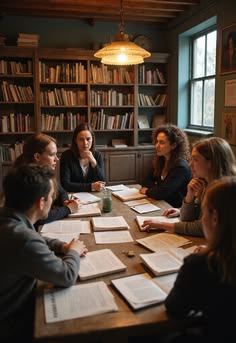
As with any established behaviour pattern, it takes time to understand where it originated, how it operates and what we fear might happen if we begin to respond differently. There may also be grief involved: recognising what previous generations were denied, what we ourselves may have accepted, and how much of our identity has been shaped by expectations we never consciously chose. The work involves learning to distinguish between genuine care and accommodation, compromise and self-abandonment, responsibility and the expectation that we must manage everyone else’s feelings. It means developing the confidence to trust our own judgement, express our needs and recognise that our worth does not depend upon how successfully we fulfil the expectations of others. This is not about replacing one set of prescribed roles with another. Nor is it about rejecting relationships with men. It is about establishing relationships in which autonomy, respect and mutual responsibility are possible.
Reclaiming a sense of self
Cultural change is rarely a straightforward process. Laws can change, language can evolve and social attitudes can shift, but the psychological legacy of generations of conditioning takes longer to address. We are perhaps witnessing a stage in which women are increasingly questioning not only the structures that have restricted them, but also the beliefs those structures have left behind. The process begins with recognition: recognising the expectations we have inherited, the behaviours we have learned and the ways in which we may have diminished ourselves to maintain acceptance, security or belonging. It continues through the gradual development of a more independent sense of identity and worth. Perhaps the next stage of women’s emancipation is not only about changing the structures that restrict women. It is also about recognising and transforming the beliefs those structures have left within them.
How counselling can help
If you recognise some of these experiences in your own life, counselling can offer a supportive space to explore how earlier experiences, relationship dynamics and learned expectations may be influencing the way you see yourself today. Together, we can begin to identify patterns of self-doubt, people pleasing or emotional accommodation, understand where they may have originated and work towards developing greater self-trust, personal autonomy and a stronger sense of your own worth. You can find out more about my online counselling and psychotherapy sessions.
Collette O’Mahony November 2026